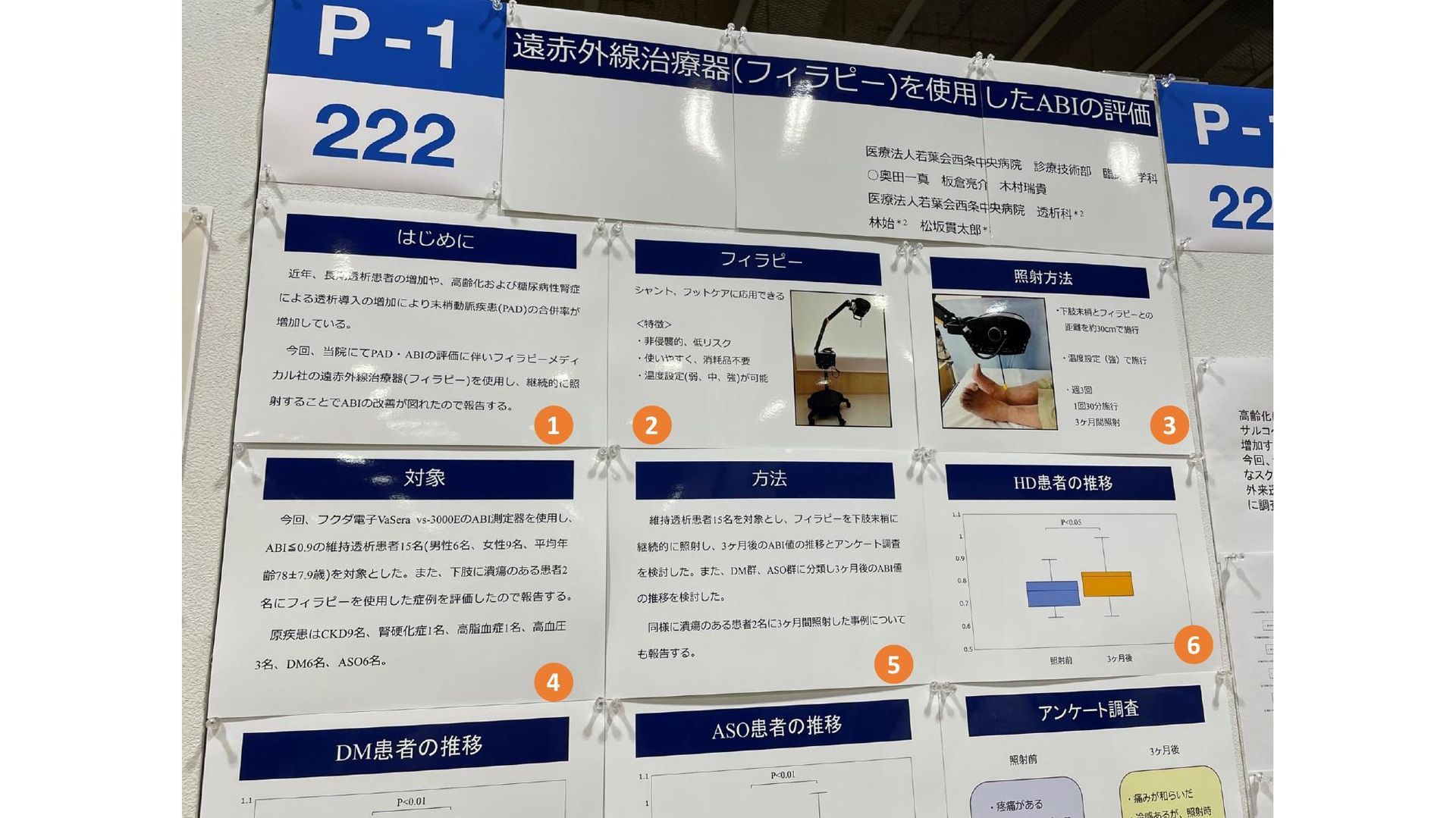
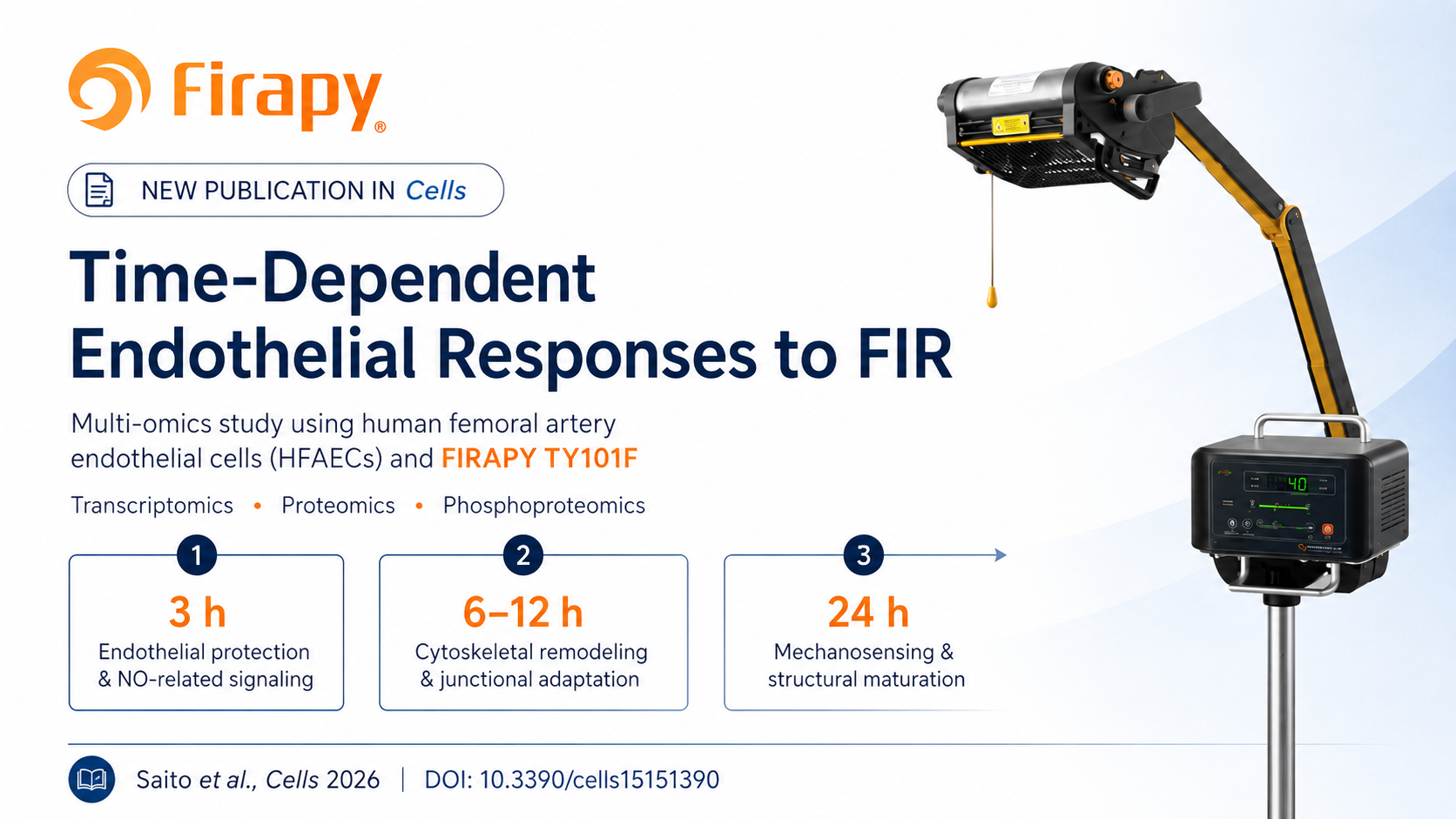
Association of Far-Infrared Radiation Therapy and Ankle-Brachial Index of Patients on Hemodialysis with Peripheral Artery Occlusive Disease
Abstract
Background and Aim
The ankle-brachial index (ABI) is recognized to be a good marker for
atherosclerosis, and is useful in the diagnosis of peripheral artery occlusive disease (PAOD) which
is prevalent among patients on hemodialysis (HD).
Methods
This randomized trial aimed to evaluate the effect of far-infrared radiation (FIR) therapy on ABI in HD patients with PAOD. PAOD was defined as patients with ABI < 0.95. One hundred and eight HD patients were enrolled, including 50 in the control group and 58 in the FIR group. A WS TY101 FIR emitter was applied for 40 minutes during each HD session, three times per week for six months. The ABI was measured before and after the FIR therapy.
Results
Regardless of FIR therapy, the bilateral ABI decreased (in the FIR group, left: 0.88±0.22 to 0.85±0.24, p = 0.188; right: 0.92±0.20 to 0.90±0.23, p = 0.372; in control group, left: 0.91±0.23 to 0.88±0.21, p = 0144; right: 0.93±0.17 to 0.89±0.21, p = 0.082). Multivariate logistic analysis of the FIR group revealed that high uric acid (odds ratio [OR]: 2.335; 95% confidence interval [CI]: 1.117-4.882; p=0.024) and aspirin use (OR: 16.463; 95% CI: 1.787-151.638; p=0.013) were independently associated with increased bilateral ABI after FIR therapy.
Conclusions
This study demonstrates that ABI is not increased after FIR therapy in HD patients with PAOD. However, in the FIR group, patients with higher uric acid level or those who used aspirin have increased bilateral ABI after FIR therapy.
-Int. J. Med. Sci. 2016, 13(12): 970-976
Want to know more?
Contact us for more detail